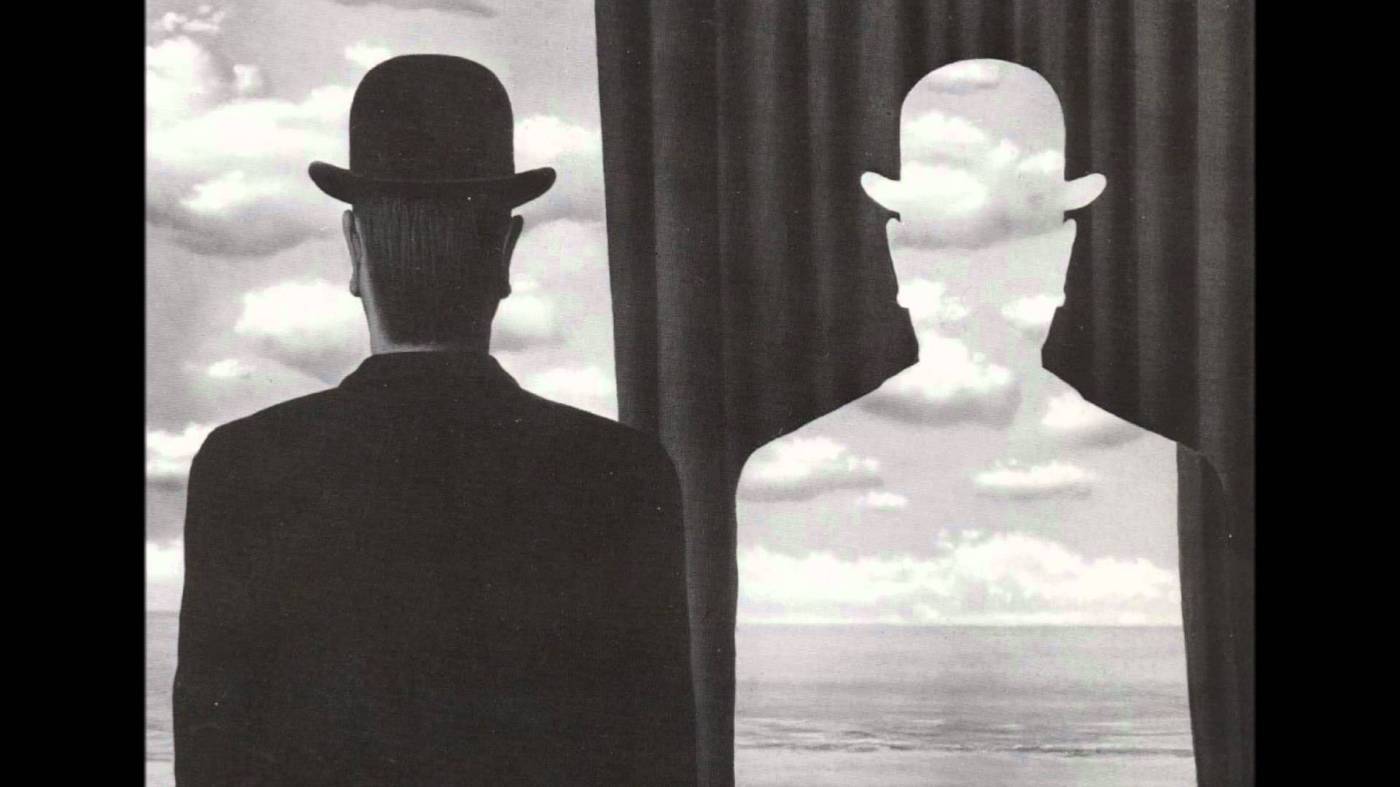
The Illusion of Dualism
It’s easy to be swept up by the words of someone who touches a nerve within us—someone who says something that resonates just enough to make us stop thinking critically. We begin nodding along, and soon we’re embracing not just the truth we felt, but everything else that person or group claims—without pause, without question. That’s the danger of resonance without reflection.
But perhaps the reason we fall so easily is because of the very struggle that lives within us: the conflict between two forces, two voices, two truths. Call it dualism. Call it the war between light and shadow, spirit and flesh, the eternal and the temporary. Whatever name we give it, we feel it deeply. It is the tug-of-war between the part of us reaching upward and the part anchored to the earth.
This inner division gives us a unique lens to perceive the world. We look outward and see the duality reflected in nature—in joy and sorrow, creation and destruction, birth and death. We see hurricanes flatten cities and then witness communities rise from the rubble. We watch cruelty unfold in headlines and then feel the kindness of strangers in moments of need. And in this contradictory world, we try to reconcile the idea of a loving Creator with the presence of suffering. How could an all-loving source allow such darkness to exist?
So, we do what humans do best—we create stories. We personify mystery. And one of our most enduring stories is the one of good versus evil, God versus the devil. It’s a convenient narrative. If God is love and perfection, then surely there must be another force responsible for the rest. And thus, we created the devil—not necessarily out of revelation, but out of a desperate need to make sense of what we cannot grasp.
But I don’t believe the Source of it all is a person. Maybe it is. Maybe it once was. But if there is a Creator, I don’t imagine it being subject to the same emotional turbulence that we are. I can’t see it jealous, angry, or vengeful like the depictions we find in ancient texts. If those who made us “in their image” were indeed real, as suggested by various scriptures, maybe *they* struggled with emotions. Maybe *they* exhibited jealousy and wrath, and perhaps that is why so much of what we read in sacred texts feels so human.
There’s a curious statistic I once came across: in the Bible, God is said to have taken millions of lives, while the devil is responsible for only a handful—and even those, like in the story of Job, happened with God’s permission. That doesn’t sound like the absolute contrast of good versus evil. It sounds like something more complicated. Something more human.
So, when I speak of God, I don’t mean a being sitting on a throne in the clouds. I don’t see white robes, flowing beards, or thunderbolts. I see breath. I see light. I see the force behind all things. Something more like the wind or gravity—everywhere and nowhere all at once. I think of black holes, capable of bending light and time, pulling into themselves the fastest thing in the universe. And yet, at their core, they appear as absolute nothing. The most powerful force we know is, in essence, the absence of all. And that, to me, reflects the mystery of the Source.
Everything came from nothing. Science confirms it. Spirituality intuits it. Creation sprang out of void. So how could we ever define such a mystery with something as limited as human language or perception?
There’s a line I’ve used before: *If you ask a horse what God looks like, he will probably describe a horse.* And we do the same. We imagine a divine being in our image—because that’s all we know. We give it gender, posture, politics, even facial expressions. But in doing so, we diminish the magnitude of what we’re attempting to understand.
I attend a Christian church. And to many Christians, I might seem like the worst kind of believer—or not one at all. But I deeply value the power of belief. I value the community, the rituals, the seeking. After studying many of the world’s religions, I’ve come to believe that most of them are beautiful attempts to reach for something greater, to make meaning out of the chaos.
Yet I cannot pretend that the God described in every verse of scripture is the God I experience—the Source I feel inside of me, and inside of every person, every tree, every breath. That Source feels less like a person and more like an essence. A presence. A mystery so expansive that to call it a “being” feels reductive.
I believe in community. I love my people. I love my church. I believe most of us are doing the best we can to live good, meaningful lives. I don’t think belief in religion is necessarily harmful. But I do believe that when belief becomes a weapon, when it turns into rigid dogma that judges others or claims absolute knowledge, it can cause more harm than good. Because if something were truly a fact, there would be no need to *believe* it. We believe because we *don’t* know for sure.
So, I speak to my children with this distinction in mind. I share with them my convictions, but I make it clear: *This is what I believe—not what you must believe.* That’s how I teach them ethics too. I tell them not to kill—but I also tell them that if someone breaks into our home to harm their family, they must protect what they love, even if that means taking a life. In that case, taking a life is not murder—it is love in defense. Context matters. Experience reveals truth in ways rules never can.
As I’ve grown older, I’ve become less inclined to label anything as wholly evil or wholly good. I’ve realized that many of the worst things that ever happened to me were, in hindsight, the seeds of my greatest growth. I think of Oprah—raped as a child, and yet somehow those tragedies became part of the fire that shaped her indomitable spirit. How do we label that? Was it evil, or was it part of something incomprehensibly larger?
Steve Jobs once said you can’t connect the dots looking forward—you can only connect them looking back. And that has always stayed with me. Because often what we call “bad” is just “incomplete.” Our view is too narrow to understand the whole.
So, in closing, I don’t believe in dualism—not in the rigid sense of heaven and hell, good and evil, God and devil. I believe those are human projections. I believe dualism is a mirror of our inner conflict, not a reflection of the universe itself. We need stories to cope with what we can’t explain. But that doesn’t mean those stories are true.
And so I return, again and again, to Socrates. Because more than any certainty, what I truly know is that I don’t know. And that, in itself, may be the beginning of wisdom.

 Jimmy Perez
Leave a comment