We live in a world where true listening has become rare. Most of us enter conversations already preparing our response instead of receiving what is in front of us. Our minds race ahead, forming conclusions, defenses, explanations—anything but presence. This habit leads us to respond too quickly. And by “too quickly,” I don’t just mean speaking fast; I mean speaking before we have taken the time to truly process what we heard, or how we feel, or what we actually want to say.
When we react rather than respond, we invite miscommunication. We lose clarity. And once words escape our mouth, they cannot be taken back. We often wish we could retrieve them, reshape them, soften them—but the imprint has already been made. Words have weight, even when we pretend they don’t.
Part of why we rush is because silence makes us uncomfortable. Many of us feel the urge to fill every gap with noise—“um,” “uh,” “you know?”—or with explanations and reassurances.
We are frightened by the empty space between thoughts. We feel responsible for maintaining momentum, as if silence means something has gone wrong.
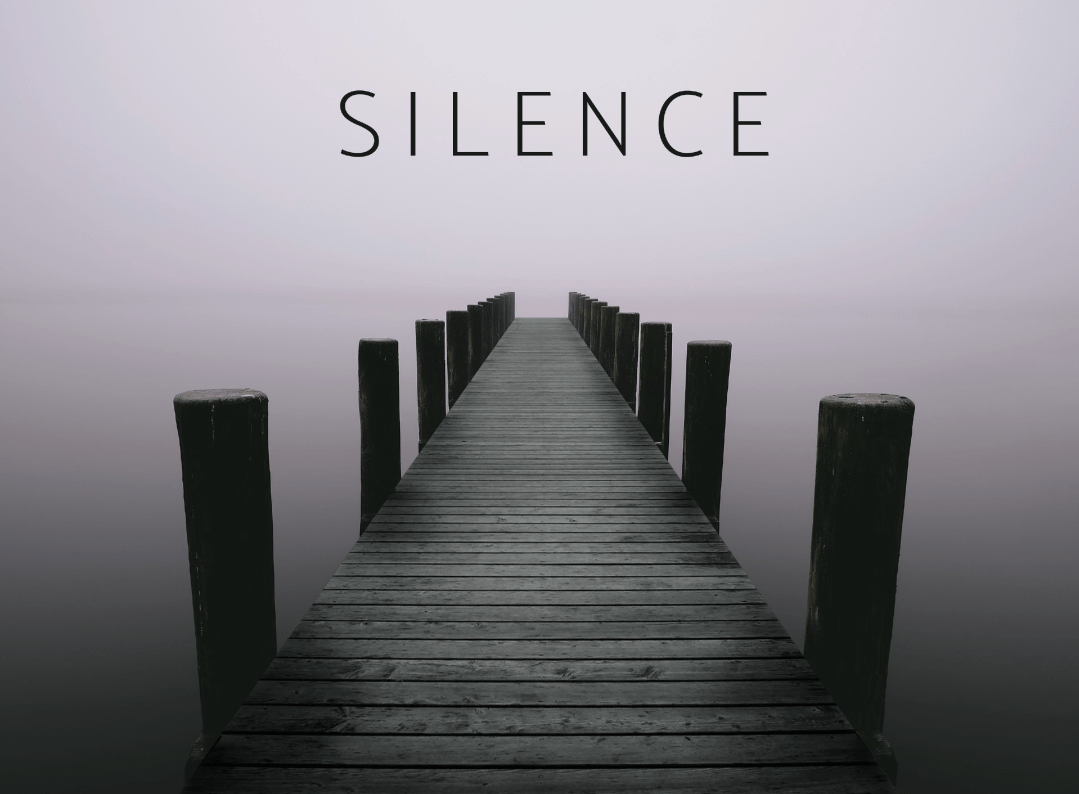
But silence is not the enemy. Silence is a tool. Silence is a teacher.
We must learn to acquaint ourselves with silence—to sit with it, breathe with it, allow it. When we pause, even briefly, we give ourselves and others the chance to reflect, to digest, to understand. Pausing is an act of respect, both for the one speaking and for the one listening. It is a moment of honoring the complexity of communication.
Because communication is complex. We are taught what to think, not how to think. We memorize ideas, adopt beliefs, repeat arguments—but rarely are we shown how to listen, how to interpret, how to process meaning beyond the words.
Most of communication doesn’t even happen in the words. I once read that only about 7% of communication lies in the words themselves. The rest lives in tone, in pace, in facial expression, in posture—in all the nonverbal channels that carry the true emotion behind the message. That means every conversation is layered with signals: spoken, unspoken, visible, invisible. Without silence, we miss most of them.
When we pause, we allow room for all these layers to land. We allow the emotional tone to reveal itself. We allow the intention to surface. We allow our body to translate what our mind might overlook. And we also give space for our own internal clarity to arise—clarity about how we want to respond, what we want to express, and whether our reaction aligns with the truth inside us.
In this book, I explore polarities—two ends of many subjects—not because life is actually that simple, but because using two points helps highlight the space in between. Life is not binary; it is infinite in shades and possibilities. But when we learn to examine the extremes, we also learn to become aware of everything contained between them.
The more aware we become, the simpler life feels. Complexity will always exist—life is intricate, layered, full of paradox and nuance. But awareness brings simplicity. Awareness allows us to live awake, present, unburdened by false stories, assumptions, fears, or drama. When we slow down and become conscious in each moment, life begins to feel less like something to survive and more like something to experience fully.
Each person’s process is unique. There is no single method, no universal formula. As I often say, I have nothing new to teach. I simply reflect my own journey—what I have learned, what has helped me see more clearly, what has brought me closer to peace. My hope is that some part of my experience may resonate with yours and become useful on your own path.
One of the greatest tools I have found is silence. Sitting in silence. Becoming comfortable with silence. Letting silence reveal what noise hides. Letting silence guide my communication—both how I speak and how I listen.
And so, if this book is a toolbox for navigating the inner and outer worlds, then let silence be one of the tools you pick up and try. The next time you feel the urge to respond immediately, pause. Let a moment of quiet settle. Let the mind and body process. Let meaning surface. Let intention become clear.
And then, respond—not from reaction, but from awareness.

 Jimmy Perez
Leave a comment