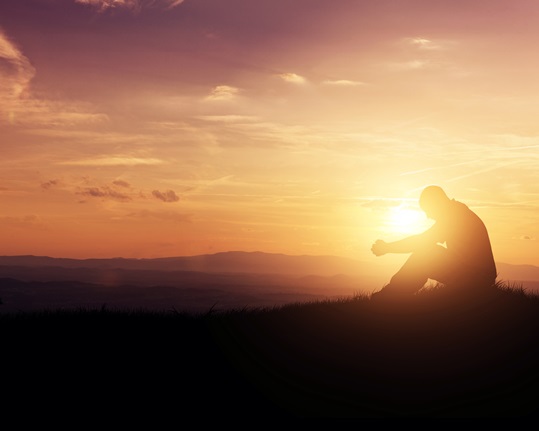
Surrender
I often wrestle with the tension between surrendering to the divine within us and taking control through the ego, what some call the flesh. There are times when I tell myself I am surrendering, yet deep down I sense it is my ego pretending to let go while still holding the reins. Prayer, I believe, plays a vital role in helping us distinguish between the voice of the ego and the voice of the true self, the divine presence within us.
To me, this true self is God, the soul, the Holy Spirit. Through this connection we can navigate life with trust and faith, whether that means surrendering to a situation or acting decisively in the most effective way. When Jesus said, “The kingdom of God is within you” in Gospel of Luke 17:21, I believe he was pointing to this truth. The soul, the spirit, is that greatness within us where God resides.
There is a delicate balance between surrender and self responsibility. It is easy to fall into the trap of saying, “I surrender. Whatever happens is beyond me,” and use that as a way to avoid accountability. Yet there is wisdom in the saying, “Work as though there is no God, but pray as though God is everything.” This perspective honors the gifts of judgment and conscience that our Creator has given us to think critically and solve problems, while also recognizing when it is time to let go and allow God to guide the outcome.
I often think of surrender as surfing. When standing on a board, we must humble ourselves and respect the immense power of the ocean beneath our feet. If we simply stand there doing nothing, the waves will overwhelm us and place us in danger. Instead, we surrender to the power of the ocean while still taking responsibility for moving with it moment by moment. If we fail to recognize its direction or ignore its subtle signals, we set ourselves up for struggle and suffering.
There are many other ways to understand surrender while still exerting effort. A sailor adjusts to the wind but cannot create it. A farmer plants seeds but cannot force them to grow. Sleep comes only when we stop trying to command it. In each case, effort prepares the way, but surrender allows the result.
Every day we face countless decisions, both small and significant. Some moments require decisive action, while others call for patience and trust in something greater than ourselves. The challenge is that our ego, often driven by fear and uncertainty, cannot reliably tell the difference. To find clarity, we must cultivate faith and trust, qualities that allow us to act from inner peace rather than anxiety.
There are not many tools that strengthen faith and trust, but I believe meditation and prayer are among the most powerful. Meditation brings clarity and calm. We know it is working when our behavior becomes more balanced and less reactive. Prayer becomes transformative when it shifts from asking for specific outcomes to seeking guidance and alignment with God’s will.
Through prayer, meditation, and sincere openness to divine guidance, surrender and action can coexist in harmony. This is the balance between knowing and not knowing, certainty and uncertainty, effort and release, much like the complementary forces of yin and yang.
Surrender does not mean abandoning responsibility. It means recognizing that even when circumstances are not our fault, they may still be ours to respond to. In that response lies our dignity and our freedom. When accountability and surrender meet, life can be navigated with grace and purpose.
Refusing to surrender can be as limiting as refusing to believe in anything greater than oneself. It may be possible to survive that way, but survival is not the same as living well. A life guided only by control is often heavy, rigid, and exhausting. Surrender, by contrast, introduces flexibility, trust, and a deeper sense of peace.

 Jimmy Perez
Leave a comment