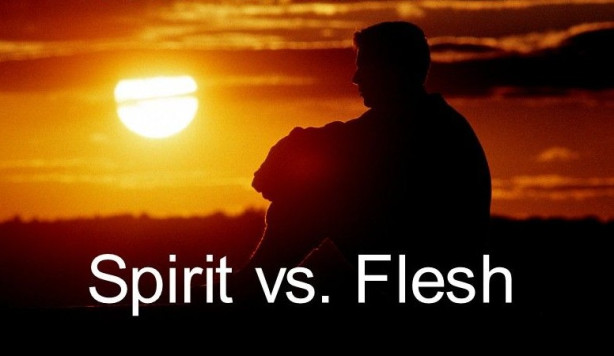
What if emotions are to the soul what touch is to the flesh
We often say that we are spiritual beings having a human experience, and perhaps nowhere is that more evident than in our relationship with emotion. For while physical pain can be sharp and immediate, emotional pain often lingers deeper, carving itself into the unseen chambers of our being. I’ve experienced grief, heartbreak, betrayal—forms of pain so heavy that I’ve whispered to myself: “I’d rather be stabbed than feel this again.” And though I do not diminish the reality of physical suffering—I’ve known that too—it’s the emotional wounds that tend to echo longer.
We taste, we smell, we hear. These are the accepted languages of physical reality. But what language do love, despair, intuition, or longing speak? What sense registers the wind’s whisper to the soul, the ache of loneliness, or the sacred stillness in prayer? These experiences transcend the tangible—they are not grasped by the five senses, yet they are no less real. In fact, they might be more real, more central to what it means to be.
So where do these intangible forces reside? Are they part of the struggle within—the duality that defines us? Are they expressions of light, or the absence thereof? Are they the whispers of the wise child within or the echoes of the unformed self not yet awakened?
As I write, I return often in thought to the ancient symbol of the Yin and Yang—a philosophy that predates even the 3rd century BCE. Its imagery reveals an eternal truth: within every light exists a shadow, and within every shadow, a spark of light. But more than their coexistence is the recognition that they are not opposites—they are one. They are not at war—they are in balance. The night does not fight the day; it completes it.
This book, at its core, is not just about the battle between the light and dark within us, but the realization that the battle itself is part of the oneness. We speak of light and darkness, maturity and innocence, wisdom and ignorance, as if one is inherently better. Yet the immature child—the one we often dismiss—may in fact be the closest to the source. That innocence, that lack of conditioned light, may be the purest expression of being. When I speak of darkness, I do not speak of evil. When I say “lack of light,” I do not say it in condemnation. I refer rather to a dormant state—an absence of awakened awareness.
The truth is, this internal duality—the two within us—is not merely a metaphor. It is, I believe, the most fundamental reality of our human experience. And until we confront it, listen to it, and make peace with it, we cannot truly awaken. To awaken is to remember. To be enlightened is to reconnect. To be born again is to die to the fragmented self and walk forward in light—not as an escape from the darkness, but as a full integration of all that we are.
This is why we pray for wisdom, not answers. Why we meditate for clarity, not escape. Why we seek silence—not to avoid the world but to truly hear it. We are trying, in truth, to see past the limited lens of our conditioned minds—past the judgments and stories we’ve inherited or built. We want to see not just with our eyes, but with the soul’s awareness. Because the way we hear affects the way we listen. The way we listen affects the way we love. And the way we love might just determine the very nature of the eternity we hope to dwell in.
What if heaven is not elsewhere, but here—just beyond the veil of our current understanding?
What if?

 Jimmy Perez
Leave a comment