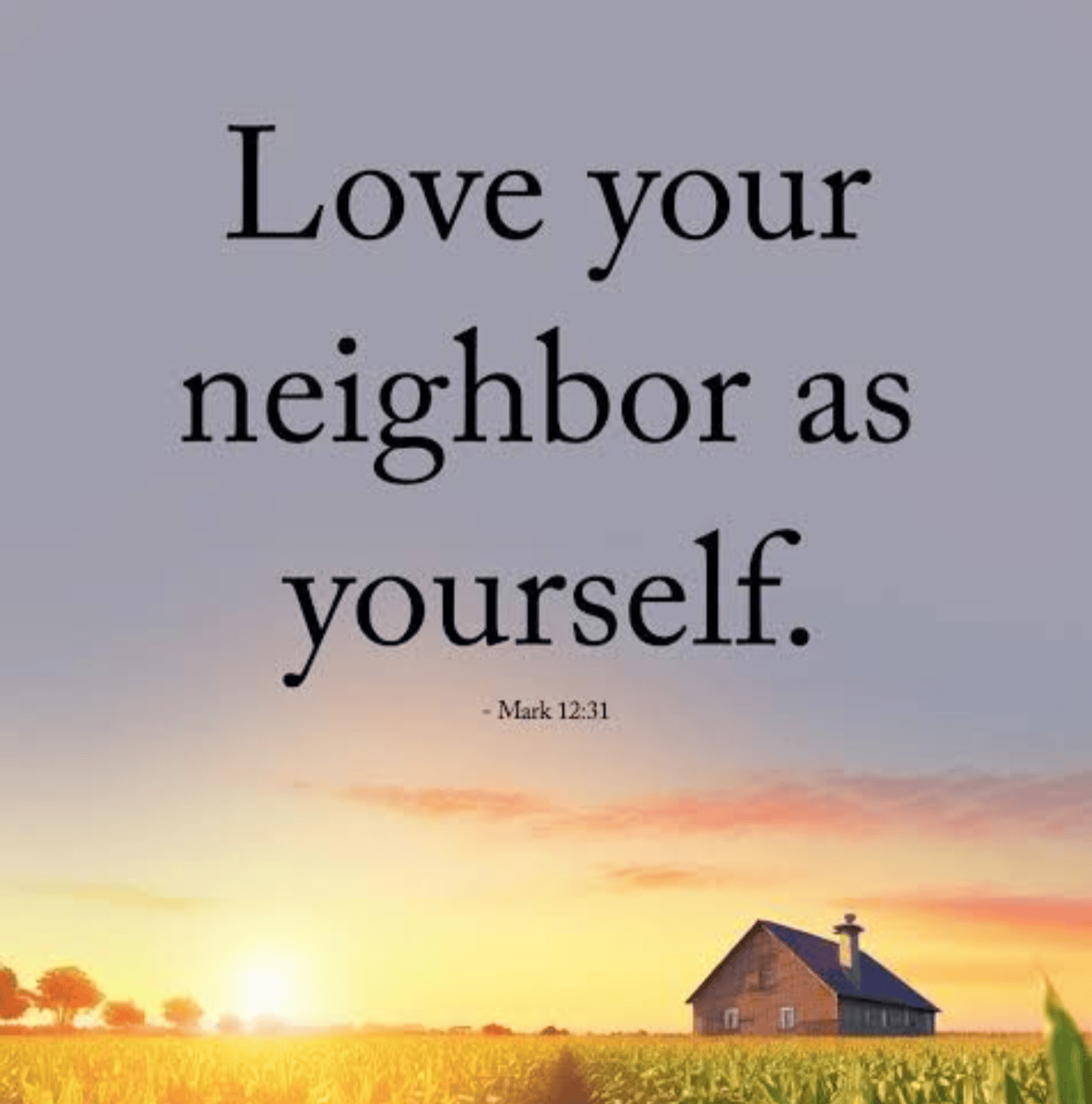
“Love your neighbor as yourself.”
I have heard those words my entire life.
They are beautiful words. Familiar words. Almost too familiar.
But the older I get, the more I wonder if we have missed something enormous in them.
Jesus didn’t say, “Love your neighbor.”
He said, “Love your neighbor as yourself.”
And that little phrase, as yourself, changes everything.
Because what if most of us don’t actually love ourselves?
What if what we call self-love is often nothing more than self-preservation?
We protect ourselves. We defend ourselves. We feed ourselves. We seek comfort. We pursue success. We avoid pain. We want to be accepted. We want to be seen. We want to be right.
But is that love?
Perhaps much of what we call loving ourselves is simply the instinct to survive.
True love is different.
True love wants what is good.
True love tells the truth.
True love forgives.
True love establishes boundaries when necessary.
True love sacrifices.
True love doesn’t need to prove its worth.
True love doesn’t constantly compare itself to others.
So perhaps the question isn’t simply:
“How do I love my neighbor as myself?”
Perhaps we should first ask:
“What would it actually mean to love myself?”
And this is where the teachings of Jesus take us somewhere much deeper.
Love God First
Jesus was asked which commandment was the greatest.
His answer was not complicated.
Love God with all your heart, soul, mind, and strength.
Then He connected it to the second:
Love your neighbor as yourself.
Notice the order.
Love God.
Then love your neighbor.
And perhaps there is something hidden in that order that we have overlooked.
Maybe I don’t have to manufacture enough self-love to finally become capable of loving other people.
Maybe I have to go deeper.
Maybe I have to discover what happens when I truly love God.
Not with part of me.
Not on Sunday.
Not merely through religious language.
But with everything I have.
Because if God is truly God, then He isn’t simply another thing in my life.
He is the foundation beneath my life.
And if I begin to recognize that, something extraordinary happens.
I begin to see myself differently.
“I AM”
Thousands of years before Jesus walked the earth, Moses stood before the burning bush and asked God what he should tell the Israelites when they asked who had sent him.
The answer was:
“I AM.”
Not “I was.”
Not “I will be.”
I AM.
There is something profound about that name.
God isn’t presenting Himself merely as an idea to believe.
He is revealing Himself as Being itself.
And then Jesus comes centuries later and speaks repeatedly about God’s presence, God’s kingdom, and the transformation that takes place within us.
When Jesus says that the kingdom of God is within you, I don’t want to rush past those words.
I want to sit with them.
Because if the kingdom of God is within us, then perhaps the spiritual journey isn’t primarily about traveling somewhere to find God.
Perhaps it is about becoming awake to the God who has never been absent.
That changes how I see myself.
I am not God.
You are not God.
But if God is truly present within His creation, then my life is not spiritually insignificant.
The person staring back at me in the mirror is not disposable.
And neither is the person standing in front of me.
Seeing Yourself Through God’s Eyes
Maybe self-love isn’t telling yourself that you’re perfect.
Maybe self-love is learning to see yourself through God’s eyes.
That doesn’t mean ignoring your failures.
Quite the opposite.
If I truly love myself, I should be willing to tell myself the truth.
I should be willing to change.
I should be willing to apologize.
I should be willing to establish boundaries.
I should be willing to surrender my ego.
I should be willing to die to the version of myself that keeps hurting myself and others.
Because love doesn’t merely make us feel better.
Love makes us better.
And when I begin to understand that my life has value because it comes from God and is held within God’s presence, I don’t have to spend my life desperately proving that I’m worthy.
I can stop performing.
I can stop comparing.
I can stop begging the world to tell me that I matter.
I can simply begin living as though I matter.
Not because I am better than anyone else.
But because I am loved.
And if that becomes the foundation of my life, something extraordinary happens to the command:
Love your neighbor as yourself.
The Neighbor Becomes Different
If I don’t know how to love myself, I may not know how to love my neighbor either.
I may confuse love with approval.
I may confuse love with rescuing.
I may confuse love with allowing someone to continually hurt me.
I may confuse love with telling people what they want to hear.
I may even confuse love with judgment.
But when I begin with God, love takes on a different shape.
I can tell someone the truth without hating them.
I can disagree without condemning them.
I can establish a boundary without becoming bitter.
I can forgive without pretending the wound never happened.
I can serve without needing recognition.
I can see someone’s brokenness without making their brokenness their identity.
And perhaps most importantly:
I can see my neighbor as someone worthy of the same grace I desperately need myself.
That is a different kind of Christianity.
That is a different way of walking.
What If We Actually Believed This?
Imagine walking through your day believing that the person who annoys you is not merely an annoyance.
Imagine looking at the difficult employee and seeing a human being before seeing a problem.
Imagine looking at the homeless person and seeing a person before seeing a circumstance.
Imagine looking at the person who disagrees with you politically, religiously, socially, or philosophically and refusing to reduce them to their disagreement.
Imagine looking at the person who hurt you and recognizing that their behavior does not give you permission to abandon your own character.
Imagine looking into the mirror and refusing to treat yourself with the contempt you would never speak toward someone you genuinely loved.
What happens?
The commandment comes alive.
It stops being a religious sentence.
It becomes a way of seeing.
And once the way we see changes, the way we live begins to change.
Love Becomes the Evidence
Jesus gave us five lessons that I believe sit at the heart of His message:
Love God.
Love your neighbor.
Forgive.
Serve.
Show mercy rather than judgment.
These aren’t five disconnected religious rules.
They are interconnected.
Love God—and you begin to see differently.
See differently—and you begin to love differently.
Love differently—and forgiveness becomes possible.
Forgiveness becomes possible—and service becomes natural.
Service becomes natural—and judgment begins to lose its grip.
And suddenly, the person who claims to love God begins to look different from the outside.
Not because they have the right label.
Not because they know the most Scripture.
Not because they can win the theological argument.
But because love has become visible.
That is what I think Jesus was after.
Not simply people who believe the right things.
People who live differently because they believe them.
The Explosive Possibility
Perhaps the most transformative thing we can discover about loving our neighbor is that it begins much deeper than our neighbor.
It begins with God.
If I truly love God with everything I have, then I can’t compartmentalize that love.
I can’t say, “God, I love You,” and then spend the rest of my day treating His creation with contempt.
I can’t worship God while believing my own life is worthless.
I can’t praise God while despising the person standing across from me.
If God is worthy of my love, then His creation deserves my attention.
And if I am part of that creation, then I am included too.
This doesn’t make me divine.
It makes me responsible for what I do with the life God gave me.
So perhaps loving myself isn’t the starting point.
Perhaps loving God is.
And perhaps when I truly surrender myself to God, I begin to discover something I couldn’t manufacture on my own:
I am worth loving because God loves me.
And when that realization moves from my head into my life, I can finally begin to love my neighbor—not from obligation, not from religious performance, and not because they have earned it.
But because I have begun to see them differently.
And perhaps that is what Jesus meant all along.
Love your neighbor as yourself.
Not because you have mastered self-love.
But because when you truly love God, you begin to see yourself—and everyone else—through the eyes of love.
And when that happens, the commandment doesn’t just change how we treat our neighbors.
It changes the way we walk through the entire world.
Love Your Neighbor as Yourself



Leave a comment